How Pop Mart’s Strategies Engineered Global Growth From China

| By Abby Chen |
What defines the future of “emotional-value” products? How have traditional marketing strategies evolved in our digital age? The brand Pop Mart provides a case study.
The Mechanisms Behind Pop Mart’s Success
Initially modeled after collectible stores in Hong Kong and Japan, Pop Mart was founded by Wang Ning in 2010 as a boutique comics and accessories shop in Beijing. Inspired by the Japanese brand Sonny Angel, Wang Ning recognized a fundamental shift in consumer shopping habits, leading Pop Mart to introduce its “blind box” collectibles in 2016.
Leveraging behavioral psychology, the blind box concept utilizes rare figures, with probabilities as low as 1 in 144, to trigger a “gambler’s mentality” in consumers. Additionally, Pop Mart employs the “Zeigarnik Effect”: the psychological drive to complete a set. Because each pull is randomized, the “finish line” constantly shifts, creating a powerful cycle of repeated purchases. This gamified experience not only excites consumers but also fuels a robust secondary market, where rare items and “hidden” versions can resell for thousands of dollars. While these sales do not generate direct revenue for Pop Mart, the secondary market acts as free advertising and inflates the perceived value of products in the primary market.
Recognizing that the future of emotional-value products hinges on intellectual property (IP) ownership, Wang Ning transformed Pop Mart into an artist scout program. The company has signed world-renowned artists, such as Kenny Wong from Hong Kong and Seulgie Lee from Korea. Today, Pop Mart manages a portfolio of over 40 IPs, including iconic characters like Molly, Labubu, and Skull Panda.
Systematic Incubation & Strategic Partnerships
Pop Mart utilizes a data-driven, vertically integrated feedback loop that guarantees product demand even during the incubation stage. A 2025 HKU Business School analysis examined how Pop Mart has conducted deep studies into Gen-Z demographics and shopping habits. By gathering data through its official app, e-commerce platforms, and strategic collaboration with Tencent Smart Retail, Pop Mart creates a feedback loop that informs both current product optimization and new IP design. The character Labubu exemplifies this approach: across three generations, designers refined skin tones and hair colors based on market response, expanding into successful series like “Have a Seat,” the “Coca-Cola Winter Blind Box,” and “Exciting Macaron.”
Chief Consumer Officer Alex Zhou describes Pop Mart as a “typical crowd brand,” reinforcing the central role consumers play in the brand’s identity. This strategy yields tangible results. The company’s 2024 report shows revenue of RMB 13.04 billion, an increase of 106.9% compared to 2023, and adjusted net profit of RMB 3.40 billion, up 185.9% from the previous year. Revenue from overseas markets, Hong Kong, Macao, and Taiwan amounted to RMB 5.07 billion, a surge of 375.2% versus the prior year, accounting for 38.9% of total revenue.
Expanding From Retail Realms to Digital Domains
Like other global consumer goods leaders, Pop Mart employs an omnichannel distribution strategy. However, unlike Japanese competitors such as Sanrio, Dreams Inc., and Bandai Namco, Pop Mart maintains strict direct control over its network. This includes 628 physical stores across Greater China and approximately 2,300 Roboshops strategically placed in high-traffic areas like airports and luxury shopping malls. This store presence reaches globally: U.S. locations surged from just 8 outlet stores in mid-2024 to approximately 98 by early 2026, with Pop Mart celebrating its 100th Roboshop in the U.S. in November 2025.
Beyond its physical footprint, Pop Mart transforms the individual hobby of collecting into a public performance. By promoting unboxing videos and fan-generated lore on platforms like TikTok, Xiaohongshu, Instagram, and WeChat, the brand fosters a highly engaged digital community. The brand also capitalizes on the “celebrity effect.” After Lisa from BLACKPINK showcased a Labubu keychain on her designer bag, followed by sightings with stars like Rihanna and Dua Lipa, Labubu evolved from a niche collectible into a must-have fashion accessory. Today, these IPs serve as a form of social currency, signaling style and status across global social media.
Labubu’s rise extends to Sotheby’s prestigious auctions, where limited editions have fetched significant prices. For instance, a limited set from the “Three Wise Labubu” series, “Don’t Hear, Don’t See, Don’t Speak”, sold for HK$203,200 (U.S. $25,890) during the Sotheby’s Modern & Contemporary Discoveries online auction in Hong Kong, which concluded on May 29, 2025. This strategy has proven exceptionally effective; according to FullIntel, Labubu’s sales skyrocketed by over 700% in a single year, contributing nearly 23% of Pop Mart’s total 2024 revenue.
Entering Global Markets: The United States
Pop Mart has successfully exported its business model to international markets like the United States. The company recognized that overseas success requires building brand recognition from the ground up. To achieve this, Pop Mart focuses on opening premium retail stores in high-traffic malls across major hubs like Los Angeles and New York City. This strategy utilizes stunning visual displays and immersive environments to capture the attention of passersby and further extend its brand identity. The same retail formula that proved effective in China is now fueling the brand’s rapid expansion across the American market.
Data, Community, and the Evolution of Brand Marketing
Pop Mart illustrates the rise of emotional-value products and modern marketing evolution. By combining data-driven strategies, systematic community-centered incubation, and strategic partnerships with a dominant omnichannel presence, the company builds a powerful ecosystem amplified by celebrity influence and a thriving secondary market. Ultimately, Pop Mart’s success demonstrates that the future of marketing belongs to community builders rather than traditional advertising designers.
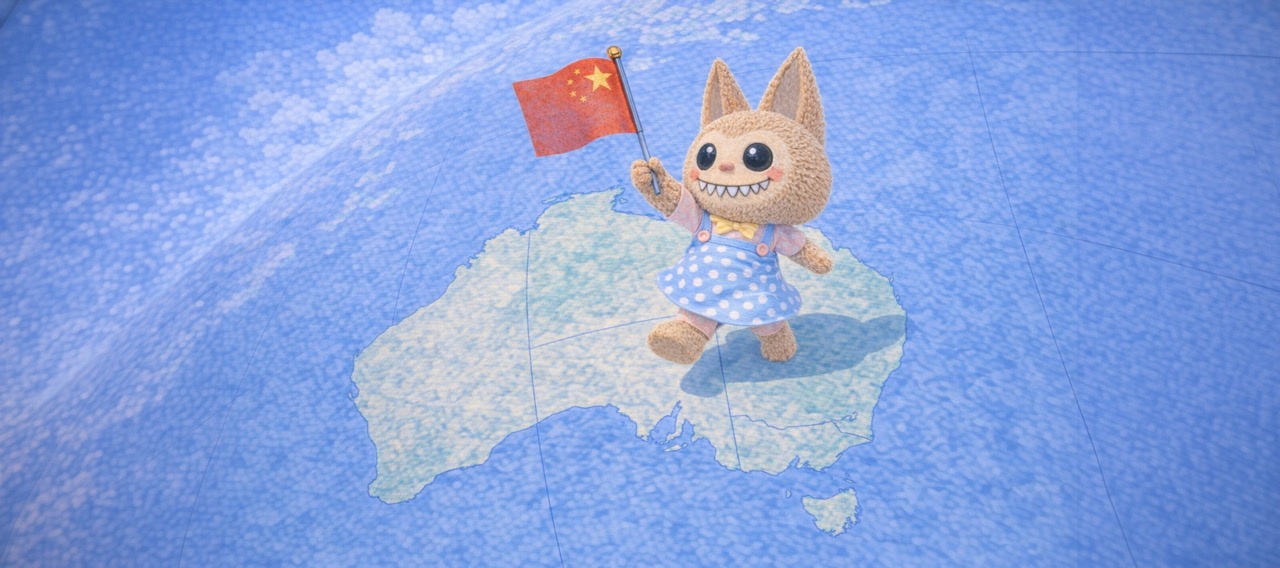
The images in this article were created using an AI image generator. All illustrations are ©Intelliwings.