
| By Caroline Gross |
Taxation, Austerity, and Parliamentary Perks Spark Protests
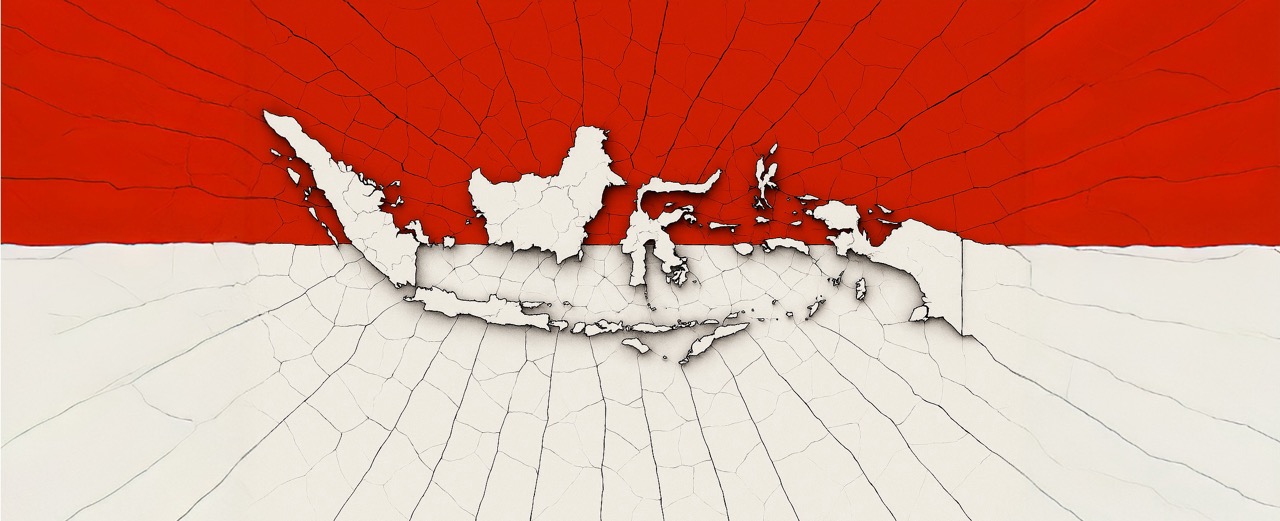
Since late August, class discord in Indonesia has reached a fever pitch as thousands of frustrated students and workers have led demonstrations protesting government corruption and growing economic inequality. Under Prabowo Subianto’s presidency, taxes were hiked and government expenditure on education, health, and public works were cut to fund a free school lunch program across the country. Though Prabowo campaigned on promises to grow the economy and improve Indonesians’ lives, his policies have angered workers; the implementation of high taxes and austerity measures to fund the lunch program have slowed national economic growth and disproportionately hurt lower-income communities. For many, in fact, Prabowo’s policies have only served to enrich the elites by funding their lavish vacations and lifestyles. Meanwhile, most households in the country struggle to afford groceries.
As this sentiment slowly swelled during Joko Widodo’s presidency and the early protests of 2025, it surged with the passage of an IDR 50 million ($3,000 USD) housing allowance—equivalent to 10-20 times Indonesia’s monthly minimum wage—granted to members of parliament. Infuriated by this decision, students and workers took to the streets to demand an end to corruption and economic equality amidst this period of high taxation and economic inflation. Currently, protests are ongoing but have lessened in intensity.
Wage Stagnation and Unemployment Deepen Inequality
For years, Indonesia has experienced high unemployment, particularly among youth. As of February 2025, the unemployment rate for people ages 15-24 stands at just over 16%, one of the highest rates in Asia. For young people, finding well-paid work opportunities remains a consistent struggle. Despite the creation of 18 million jobs between 2018 and 2024, only 14.4% were corporate or factory positions while over 80% were household businesses. With few options, the informal sector has flourished, accounting for 59% of Indonesia’s workforce as of 2023. Meanwhile, real wages have stagnated despite rising inflation, and declining employment hours across the market have catalyzed underemployment, where individuals involuntarily work fewer hours despite wanting more. With this shift to informal work, the gap between rich and poor continues to widen.
Parliamentary Perks Exacerbate Public Discontent
As GDP growth slows due to declining foreign investment, stagnant wages, inflation, and minimal household consumption, Indonesia is also experiencing the disappearance of its middle class. Currently, the minimum wage ranges from IDR 2.17 million to IDR 5.4 million, depending on the province. Meanwhile, government officials receive an average monthly pay of IDR 120 million ($7,300) in salary and perks, a 100-fold advantage compared to minimum wage workers. One such perk was the recent addition of an IDR 50 million ($3,075) housing allowance for each of the 580 lawmakers, amounting to roughly 10-20 times the minimum wage per individual allowance. Among the public, this was received with fury as it comes at a time when most Indonesians are grappling with inflation, rising unemployment, and increasing land and property taxes.
Tax Hikes Ignite Police Clashes Across Indonesia
As land and property taxes have increased, students and workers have clashed with security forces across Indonesia. In Pati, Central Java, protesters have decried a 250% land tax hike. Likewise in Bone, Sulawesi, demonstrators have condemned a 65% increase in property and land taxes. In both instances, protesters have faced harsh police resistance. With the additional burden of rising inflation reducing spending power, further clashes erupted as students took to the streets to protest Prabowo’s austerity policies that limit social support and reinforce economic insecurity. Tensions peaked after the death of a civilian at the hands of police, fueling widespread rioting and civil unrest.
A Delivery Driver’s Death Becomes a National Flashpoint
As protesters rallied against economic insecurity and government corruption, a tragic catalyst intensified the demonstrations. On Thursday, August 28th, 2025, Affan Kurniawan, a motorcycle ride-share driver, was killed by an armored police car in Central Jakarta. While delivering food, he became caught in a clash between protesters and police. Attempting to escape, he tripped and was crushed beneath the wheels of the National Police’s Mobile Brigade. Footage of the incident spread on social media, triggering a greater wave of protests against both the government and police brutality.
Kurniawan’s death escalated public outrage and expanded demonstrations nationwide. The following day, protesters in Jakarta attempted to storm the capital, hurling rocks at police who responded with tear gas and water cannons. Throughout the protests, the National Commission on Human Rights (Komnas HAM) confirmed ten deaths. In one incident, rioters set fire to a regional parliament building in Makassar, killing three civilians and hospitalizing five others. Police and military forces arrested over 1,683 protesters, while 25 officers were hospitalized with serious injuries.
Despite the violent clashes, President Prabowo quickly responded to Kurniawan’s death: “On my own behalf, and on behalf of the Government of the Republic of Indonesia, I would like to extend our deepest condolences and heartfelt sympathy. I am deeply concerned and saddened by this tragedy.” Regarding accountability, the President announced he has “instructed that last night’s incident be investigated thoroughly and transparently, and that all personnel involved be held accountable. Should it be found that they have violated laws and regulations, the firmest measures will be taken in accordance with the law.”
While this commitment to investigate was appreciated, many argue the incident reflects a larger, unresolved pattern of police brutality and state-sanctioned violence. According to Amnesty International, government forces engaged in numerous abuses throughout 2024, including unnecessary force, arbitrary arrests, torture, extrajudicial killings, intimidation, and censorship. As one protester stated, “Affan Kurniawan’s death when he was rolled over by the tank gave light to the fire, but that light wasn’t instantaneous—it was built over time.”
From Protests to Policy: Indonesia Gelap’s Partial Victory
As civil unrest escalated after Affan Kurniawan’s death, the Indonesia Gelap movement—”Dark Indonesia”—spread nationwide. Launched in February of 2025, this movement was formed due to public alarm over economic injustice at the hands of the elites and fears of democratic backsliding through the extension of state control.For 33 years until 1998, Suharto’s regime consolidated power, human rights abuses were commonplace, and civilian liberties were nearly absent. Since Indonesia’s democratic transition after Suharto’s fall, critics have pointed to erosion of democratic institutions during Joko Widodo’s presidency, allegations of 2024 election tampering, and the revision of Law No. 34 of 2004 allowing active military personnel to occupy civilian government posts—echoing Suharto’s dual-function military doctrine.
Students organized Indonesia Gelap, also known as Dark Indonesia, outlining seventeen initial demands and eight long-term demands for a freer, more equal, democratic, and transparent Indonesia. Demands target specific recipients: President Prabowo, the House of Representatives (DPR), political party heads, the Indonesian National Police (Polri), the Indonesian Armed Forces (TNI), and Economic Sector Ministries. Their platform calls for restoring social services, reducing land and property taxes, reforming police and government institutions, and immediately cutting excessive salaries and benefits.
Thus far, seven of the seventeen initial demands and two of the eight long-term demands are being processed. While protest momentum has declined, the movement’s clearest victory came in late August with revocation of the IDR 50 million housing allowance for officials. Under public pressure, House Speaker Puan Maharani announced on September 4 that the DPR would further roll back non-essential spending on overseas travel and parliamentary salary increases. “We are serious about transformation,” she stated. “Parliament must be more open, responsive, and accountable.”
Further concessions emerged through a cabinet reshuffle, in which President Prabowo Subianto dismissed five ministers. Finance Minister Sri Mulyani Indrawati, a key opponent of Prabowo’s ambitious free school lunch program, was among those removed. As one of Indonesia’s longest-serving Finance Ministers, she was considered an expert technocrat, having served three presidencies with cautious fiscal management, tax reforms, and crisis navigation to her credit. With her departure, stocks fell by 1.3%, but many saw her exit as a breath of fresh air. Protesters, infuriated by high taxes and disproportionate parliamentary perks, had long called for her removal. Her replacement, Purbaya Yadhi Sadewa, was sworn in, promising swift economic growth by “strengthening household purchasing power, increasing domestic investment, and boosting productivity in real sectors.“
The Uncertain Path From Concessions to Reform
As workers’ wages have largely stagnated in Indonesia, marked by growing participation in the informal “gig” economy, lavish government spending and excessive salaries and benefits for parliament officials have sparked widespread backlash. Combined with rising property and land taxes, public outrage over economic inequity between elites and the lower class has fueled demonstrations, catalyzed further by Affan Kurniawan’s death under a police car. While citizens’ demands are being met through the Indonesia Gelap Movement, policy analysts note that government concessions have yet to address the underlying structural issues at the core of public interest: reforming the police, de-consolidating military power, and removing austerity measures driving inequality.
Moving forward, activists and analysts claim that the trajectory of reform will likely depend on sustained protests, as channels for open dialogue have eroded under heightened military presence in civilian affairs and the entrenchment of wealth among elites. However, in an interview with Al Jazeera, one analyst remarked that “[Prabowo] still has an opportunity to defuse this. The government still has a lot of room to manoeuvre to repair the damage.” Whether the government intends meaningful, long-term reform or limited concessions remains to be seen.
The images in this article were created using an AI image generator. All illustrations are ©Intelliwings.
 Previous post
EV Policy Sunset and the New Competitive Reality
Previous post
EV Policy Sunset and the New Competitive Reality
 Next post
Developments and Challenges of the INSTC
Next post
Developments and Challenges of the INSTC