Developments and Challenges of the INSTC
| By Olivia Ernst |
The INSTC: How it Started, Where it’s Going
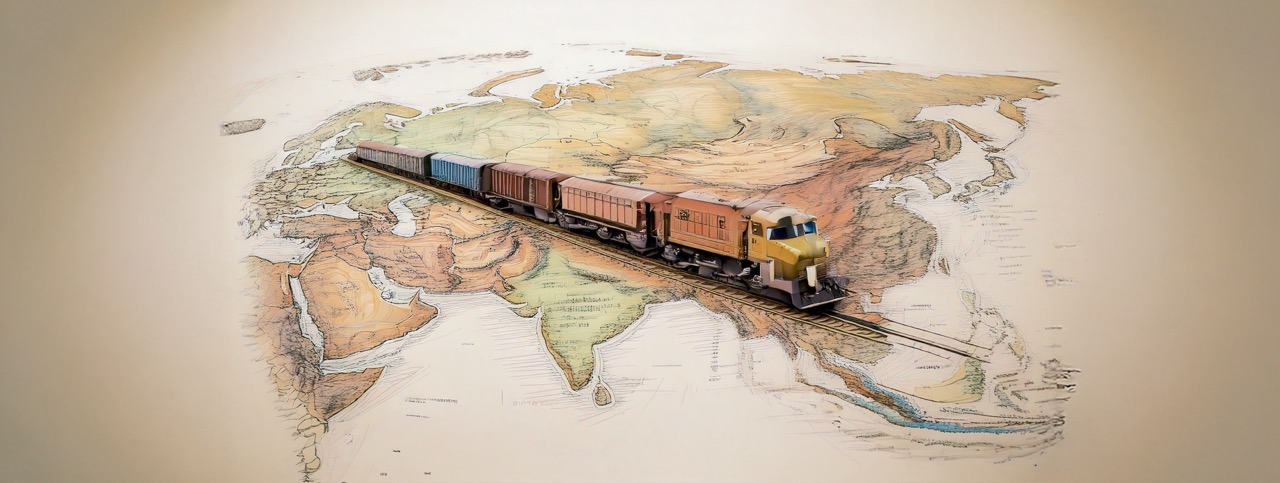
On October 13, 2025, officials from Russia, Azerbaijan, and Iran met to discuss improving the efficiency of cross-border transportation along the International North-South Transport Corridor (INSTC). This meeting among INSTC participants is one of many throughout this decades-long project. The INSTC was agreed upon in 2000 by Russia, India, and Iran and ratified in 2002, with the goal of a more efficient trade route between Russia and India than the traditional Suez Canal route. The corridor consists of three routes: the Western route, the Transcaspian route, and the Eastern route. These routes are intended to link India, Iran, Azerbaijan, Russia, and the rest of Europe via a multimodal network of railroad and sea routes. Over the past two decades, the project has emerged as a key tool for promoting Eurasian economic integration, expanding to include Kazakhstan, Belarus, the Sultanate of Oman, Tajikistan, Azerbaijan, Kyrgyzstan, Türkiye, and Ukraine in the years following its ratification, as well as Armenia, Syria, and Bulgaria as observers since 2006.
The corridor’s construction has progressed significantly over recent years. The aggregate volume of transportation along the corridor has steadily increased, growing by 18% between 2022 and 2023, and then by 19% the following year. Recent collaborations between participants signal that the corridor’s progression remains a priority. During a meeting between Russia, Azerbaijan, and Iran on October 13th in Baku, the group discussed improving the efficiency of cross-border transportation along the corridor.
Infrastructure and Financial Challenges
Despite the INSTC’s recent advancements, many challenges obstruct its completion. One of the main ones is a lack of suitable transportation infrastructure, particularly in Russia and Iran. Though the INSTC employs several forms of transportation, it primarily relies on railways, a point of weakness in Russia’s transportation infrastructure. Russia’s railways have experienced significant deterioration, resulting in 13% fewer goods transported along their eastern railways in 2024 compared to 2023. Iran has also faced significant infrastructure challenges largely due to U.S. sanctions, which have impeded their infrastructure development and financial capabilities, making it particularly challenging for Iran to update and expand port facilities along the INSTC. Sanctions have also deterred foreign investment for the INSTC in Iran, making infrastructure projects even more difficult to achieve. An example of this can be seen in India’s investment in Iran’s Chabahar project. Though the U.S. exempted the project from sanctions during Trump’s first term, the new administration revoked these exemptions in September 2025, leaving India, which has already invested over $20 million in the project and recently signed a ten-year port operation agreement, at a crossroads regarding how to proceed amidst the threat of also becoming exposed to sanctions if they continue. Along with the Chabahar port, Iran also faces pressure to complete its long-delayed Rasht-Astara railway, the corridor’s last remaining link to complete rail connectivity between Russia and Iran.
The development of bilateral connectivity infrastructure has also faced challenges. As of 2023, the Russian government emphasized the need for infrastructure development cooperation with Kazakhstan, Azerbaijan, Turkmenistan, Tajikistan, Uzbekistan, Iraq, India, and Iran to streamline trade along the route. However, facilitating this cooperation has been a challenge due to different legal and documentation requirements among countries.
The INSTC also faces financial constraints towards its completion. As of 2024, Russia and Iran were the INSTC’s primary funders, with Iran relying on Russian loans. For example, Russia finances 85% of Iran’s Rasht-Astara railway through an intergovernmental loan. Most of the financial burden rests on Russia, which is already struggling to improve its own infrastructure along the corridor. Russia’s recent infrastructure projects have drawn concern from its central bank, which warned about declining reserves in its sovereign wealth fund, further exacerbated by shrinking oil and gas revenue as a result of sanctions.
Corridor Completion in Doubt as Global Trade Alliances Shift
Whether the corridor can be completed in the coming years is questionable, considering Iran’s sanctions and Russia’s financial stability, which have been increasingly threatened in recent months as the EU fast-tracks its elimination of Russian energy dependence. Despite challenges, the INSTC still serves as a catalyst for increased Eurasian economic integration, even if the completion of the corridor is delayed. The construction of the corridor over the past few decades has generated significant cooperation across Eurasian countries, representing a shift toward regional alliances and multipolarity in global trade.
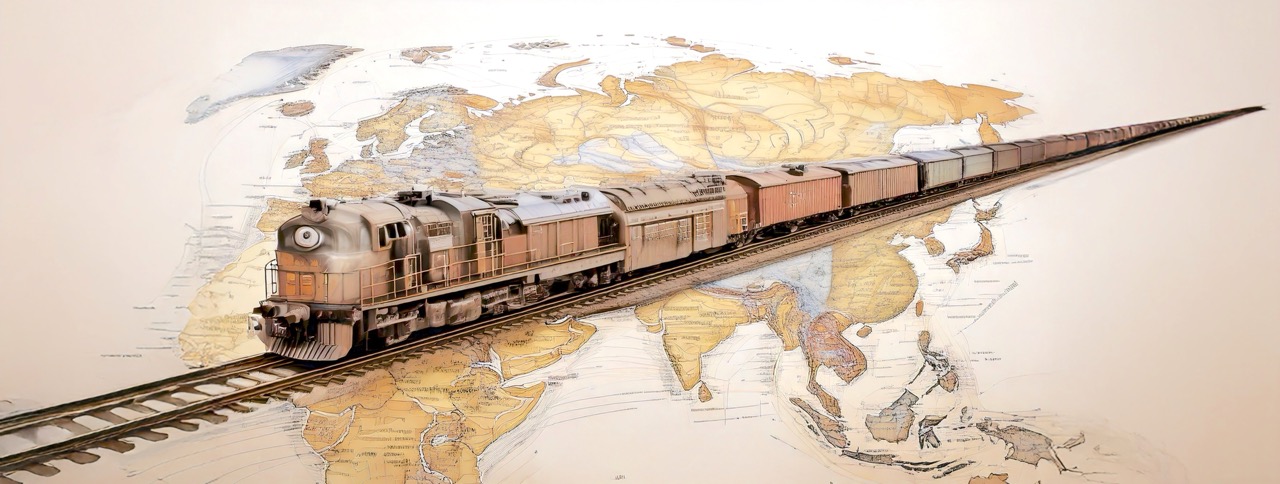
The images in this article were created using an AI image generator. All illustrations are ©Intelliwings.