| By Olivia Ernst |
The EU’s Rising Pressure to Phase Out Russian Gas
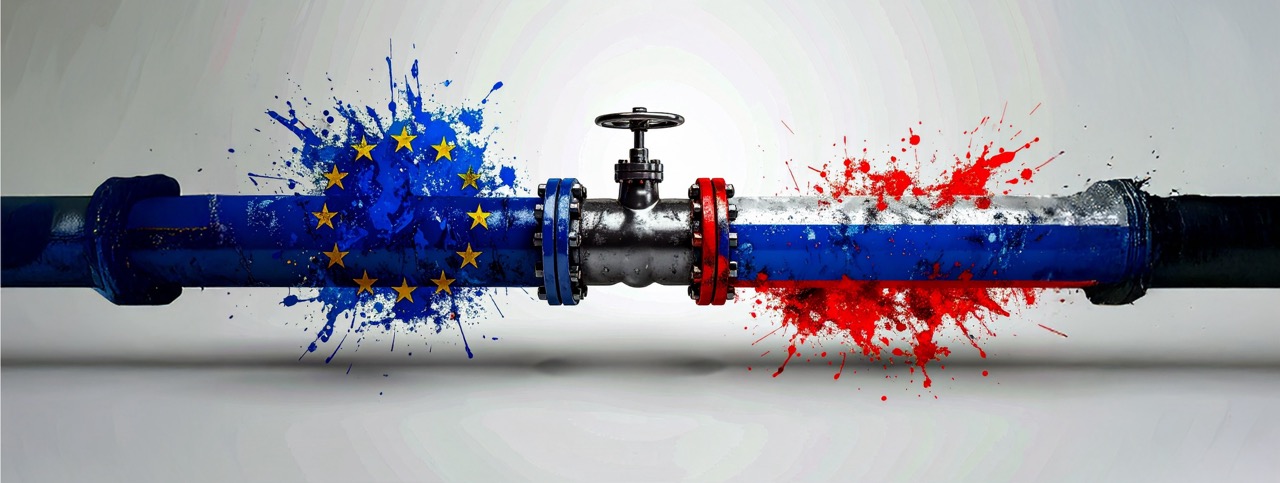
The European Union has recently intensified its ongoing efforts to reduce its dependency on Russian energy amid rising pressure from the United States. Having previously banned imports of various Russian energies such as coal, liquid petroleum gas (LPG), refined oil products derived from Russian crude, and more, the EU has now directed its attention towards addressing its dependence on imports of Russian Liquefied Natural Gas (LNG) and Pipeline Gas. Alongside proposals for sanctions on Russian LNG imports, the EU is working on legislative initiatives to phase out Russian pipeline gas, according to European Commissioner for Energy and Housing Commissioner Dan Jørgensen. These efforts have been accelerated recently in response to pressure from US President Donald Trump, shortening timelines for the EU to achieve energy independence from Russia. For example, the EU’s REPowerEU initiative launched in May 2024 seeks to end imports of Russian pipeline gas and LNG imports by 2027, whereas more recent proposals seek to shorten the timeline by a year. While data shows that overall imports of Russian gas have declined since the establishment of initiatives like REPowerEU, Bruegel argues that this success was due to Russian supply cuts rather than EU actions. The think tank even found that shipments of Russian LNG and gas imported via the TurkStream pipeline increased between 2021-2024, and the EU saw a rebound in Russian gas imports in 2024 despite sanctions. With a narrowing timeframe, setbacks such as these raise questions about how the EU has been preparing to transition away from Russian gas, and what challenges it might face.
Supply Diversification Efforts
Supply diversification efforts are central to the EU’s strategy to phase out Russian gas. One way that countries are accelerating this is through contracts and agreements with other global suppliers. The recent US-EU trade deal, where the EU pledged to spend 750 billion USD in US energy over the next three years, has solidified the US as one of the EU’s main partners in this transition. Contracts with other major suppliers include Norway and Qatar, and Algeria as the EU continues to diversify its gas supply. Beyond securing new contracts, EU countries have also expanded their regasification infrastructure to accommodate increased imports of LNG. Unless transferred via pipeline, LNG must be shipped in liquid form, then re-gasified in one of these units. Increasing these units allows EU companies access to LNG suppliers around the world that lack pipeline connections to Europe. Examples of recent regasification projects include Phase 2 of Germany’s Brunsbüttel FSRU Terminal and Poland’s Gdańsk Floating Storage Regasification Unit (FSRU) Terminal. With all of these regas initiatives, the EC is confident that the EU now has sufficient import capacity and access to alternative pipeline routes. They stated that the EU’s annual import capacity is 250 bcm, but used less than half of this last year, highlighting how there is still much room for LNG imports.
Environmental Challenges and Investor Risk
While these supply diversification efforts show promise in reducing reliance on Russian gas, they also threaten the EU’s sustainable energy goals and pose a risk to regas infrastructure investors. A key component of REPowerEU’s agenda is to transition to green energy sources. However, increasing LNG imports has adverse environmental impacts. For example, LNG requires more energy and resources to transport than pipeline gas, yielding a 67% larger carbon footprint. While Europe will still import pipeline gas from countries besides Russia, it still intends to increase its LNG imports to replace Russian sources, which will have detrimental environmental consequences. Conversely, some experts are concerned that sustainable energy initiatives will drive down LNG demand, posing a significant risk to regas investors. Europe’s gas consumption has been declining over recent years, and this trend is projected to continue. This has led to in overcapacity in LNG terminals, which can be seen in the 24% decline in utilization rates between June 2023 and June 2024.
Securing Europe’s Energy Independence
Whether the EU continues to replace Russian gas with renewables or other LNG shipments, there will be some cost involved in its effort to rapidly eliminate energy ties with Russia. Consequently, the EU faces a strategic challenge in securing short-term supply security, maintaining long-term climate commitments, and protecting infrastructure investments. Balancing these competing priorities will require careful calibration, as any path forward demands trade-offs that could reshape Europe’s energy landscape for decades.
The images in this article were created using an AI image generator. All illustrations are ©Intelliwings.