

| By Barry Yao |
Putting the Brakes on Clean Vehicle Incentives
Studies show that in the long run, owning electric vehicles is more cost-effective than traditional gasoline vehicles. Lower maintenance and fuel costs, as well as steady resale value, combined with government subsidies, have made EVs an attractive option for American car buyers. The Clean Vehicle Tax Credit, created to reduce the cost of electric vehicles and promote wider adoption, provides buyers up to $7500 for a new EV and up to $4000 for a used one. However, this incentive is scheduled to sunset on September 30th of this year, marking the end of one of the most prominent subsidies in the Inflation Reduction Act.
Intended to catapult the United States into a dominant player in the EV industry, the tax credit not only encouraged consumer adoption but also acted as a catalyst in driving investments. As a demand-side subsidy, where the government encourages consumers to spend more by increasing their disposable income, the lowered price reduced the financial threshold of purchasing an EV and made them more attractive to mainstream consumers. This growing consumer base, including over 300,000 buyers in 2024 who claimed the credit and saved $2 billion, also gave automakers confidence that investing in EV production was an economically viable decision. Additionally, it incentivized automakers such as Ford, General Motors, and Chrysler to commit billions to support the manufacture of EV components and batteries within the United States.
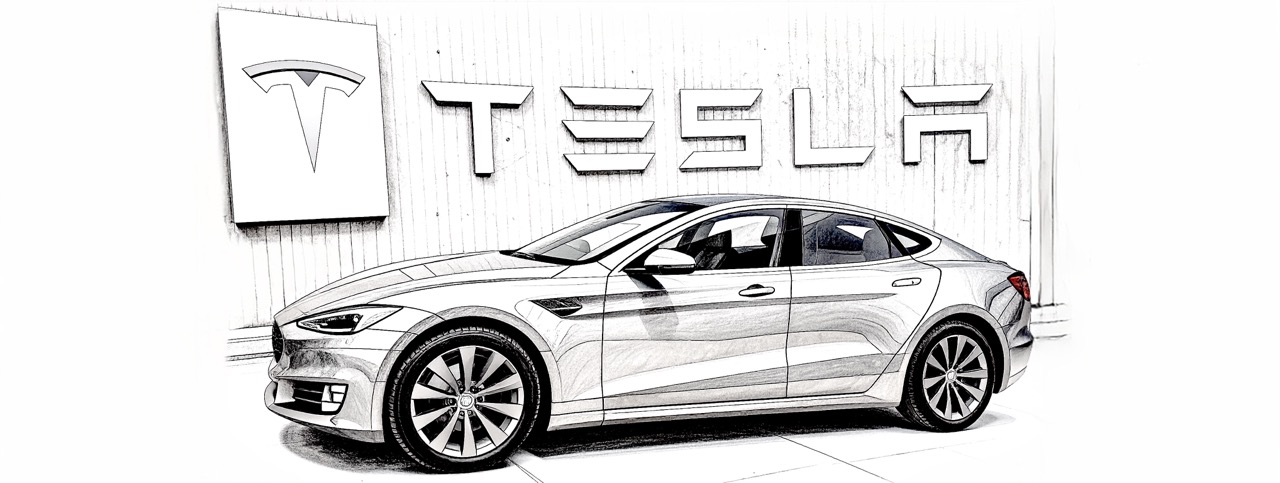
Government Support Drives EV Industry Acceleration
The expiring tax credit also provided room for new entry and competition in the EV industry by reducing significant fixed costs, an entry barrier. Companies such as Lucid Motors, which entered the market offering high-end cars well above the average price, benefited from the credit as it eased the company’s entry into a capital-intensive environment and expanded its consumer base. Besides its direct impact on sales, the federal tax credit also provided new firms with a strong signal of government commitment to the sector. By subsidizing purchases, the policy showed that Washington is not only interested in the short-term adoption of vehicles but also the long-term development of the ecosystem. For new entrants, this created a sense of certainty that their investment in the electric vehicle market would be accompanied by governmental support while they were proving their business models. Additionally, the policy gave new entrants time to achieve economies as production expanded without fearing a downturn in consumer demand due to price. By connecting the subsidy to industry development, the tax credit bridged the gap between the early-stage adoption of EVs and market scaling. As such, the credit acted as a guarantor, ensuring that new entrants with viable business models could count on consistent demand while they pursued long-term goals in expanding production capacity.
Shifting Purchasing Decisions with Tax Incentives
Beyond lowering prices, the tax credit also shifted demand from “marginal buyers”, those considering either an EV or non-EV, from buying gas cars to purchasing EVs. Functioning as an immediate discount, the incentive reduced the financial threshold of buying an EV, while offsetting concerns about battery durability and range. Initially introduced as a subsidy, the tax credit provided confidence in the EV market, as the government’s support created momentum that convinced hesitant buyers to switch their purchasing decisions to EVs. This effect was particularly powerful for buyers on the fence, where a significant incentive could tip the balance toward adopting new technology.
From an economic perspective, the discount impacts price elasticity, making buyers more responsive to cost changes and producing a greater consumer surplus: the difference between what buyers are willing to pay and what they actually pay. For example, if a traditional gas car costs $40,000, consumers may be priced out of a $50,000 EV. However, with the credit lowering the EV’s price to $42,500, the EV reenters that consumer’s decision-making process.
The tax credit has also had significant effects on EV affordability and adoption in the US. Since its introduction, 87% of all EVs purchased or leased in 2024 received the credit. Combining affordability with high participation rates, the federal clean vehicle credit reinforced the notion that EVs remain a key part of the future of the American auto industry.

The Pull-Forward Effect of Tax Credit Expiration
Therefore, the expiration of the tax credit will indubitably impact the EV market. As the credit nears its end, buyers rush to secure its benefits, creating a “pull-forward effect.” This effect temporarily increases demand, leading to a short-term sales spike. According to Cox Automotive’s EV Market Monitor, EV sales reached a record high in August, with new EV sales up 14.1% month-over-month and 17.7% year-over-year. This surge will also result in temporary shortages and high turnover of used EVs, putting price pressure on certain models.
The credit’s removal will immediately raise the cost of purchasing EVs, as buyers who previously enjoyed a $7500 or $4000 discount now face paying full price. This will shift the demand of marginal buyers, causing them to either delay their purchase or abandon buying an EV altogether, thereby reducing overall demand. Automakers may respond with rebates, 0% APR financing, or discounts to mitigate the loss of the credit. Nevertheless, sales volume could drop, causing EV inventories to rise and creating challenges for automakers as they adjust production plans to meet new market conditions.
The post-credit reality highlights the dilemma of such incentives. On one hand, tax credits can boost adoption and provide new technologies with the confidence needed to overcome entry costs. However, they can also create dependence. Without the tax credits, price-sensitive consumers may revert to traditional gas cars, which have lower upfront costs than EVs, or delay their purchase altogether. The short-term implications could be marked by volatility, with sales dropping far below the levels seen in the rush leading up to the expiration date. Finally, the end of the credit would signify a decline in the US government’s interest in promoting broader EV adoption.
Consequences for American EV Manufacturing
The decline of government support will have a significant impact on American EV manufacturing, as the credit was a key driver behind the industry’s rapid expansion. The shrinking consumer base would force automakers to limit future investments and projects, while new entrants would face financial strain due to their narrow margins’ dependence on steady demand. A retreat in government interest in EVs could also disrupt the EV supply chain, much of which, including factories and mineral processing plants, was established through provisions in the Inflation Reduction Act that reward domestic content. Manufacturers would lose economies of scale, producing EVs at lower capacities, driving up per-unit costs, and further increasing prices that could push out domestic consumers.

Global Competition and American Firms’ Disadvantage
On a global level, as the European Union and China continue to invest in their respective EV industries, a slowdown in US interest would put American firms at a disadvantage. These firms may decide to source from abroad where costs are cheaper, causing the EV supply chain to become increasingly reliant on foreign countries, particularly China, which processes 65% of the global lithium supply. Without incentives to develop domestic EV technologies, production capacity, and global market presence, American firms might cede innovation and leadership to competitors abroad. However, reduced government interest would not entirely eliminate domestic EV manufacturing but could definitely stall its expansion and momentum.
A Pivotal Moment for US Auto Manufacturing
As the September 30 deadline approaches, the expiration of the EV tax credit will inevitably test both consumer demand and industry manufacturing. The turbulence it brings will undoubtedly have vast consequences for American car companies, potentially forcing the United States to play catch-up in a sector it once dominated. The decline in government support risks stalling domestic EV production, disrupting the supply chain, and shifting innovation and market share abroad. Without continued incentives, the industry faces a period of uncertainty, volatility, and potential contraction, jeopardizing its competitive edge in the global EV market.

The images in this article were created using an AI image generator. All illustrations are ©Intelliwings.